Note 4.3.1.
This form of
if statement is much less common than the if-else statement you learned about in Section 4.2.if statement is one in which the else clause is omitted entirely. This creates what is sometimes called unary selection. In this case, when the condition evaluates to True, the statements are executed. Otherwise the flow of execution continues to the statement after the body of the if. Here is what the flowchart looks like: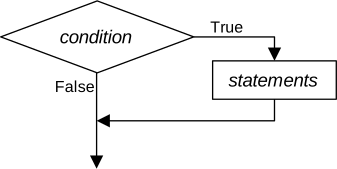
x is negative? Try it.if statement is much less common than the if-else statement you learned about in Section 4.2.x = -10
if x < 0:
print("The negative number ", x, " is not valid here.")
print("This is always printed")
a.
This is always printed

b.
The negative number -10 is not valid here
This is always printed

c.
The negative number -10 is not valid here
if statement here.if block as well as the statement that follows the if block.if block because it is not enclosed in an else block, but rather just a normal statement.if must have an else clause.if block without a corresponding else block (though you cannot have an else block without a corresponding if block).x = -10
if x < 0:
print("The negative number ", x, " is not valid here.")
else:
print(x, " is a positive number")
else:
print("This is always printed")
if block must have exactly one corresponding else block. You will see how to make a chain of conditions in a later section.else block is not attached to a corresponding if block.if and are of the opinion that every if should always have an else, Python has you covered with a special statement called pass, which means “do nothing”.number = int(input("Enter a non-negative number: "))
if number < 0:
print("Sorry, negative numbers are not allowed.")
print("Your number was", number)
pass so that we can have an else clause to go with the if:number = int(input("Enter a non-negative number: "))
if number < 0:
print("Sorry, negative numbers are not allowed.")
else:
pass
print("Your number was", number)

